The Body’s Deepest Well
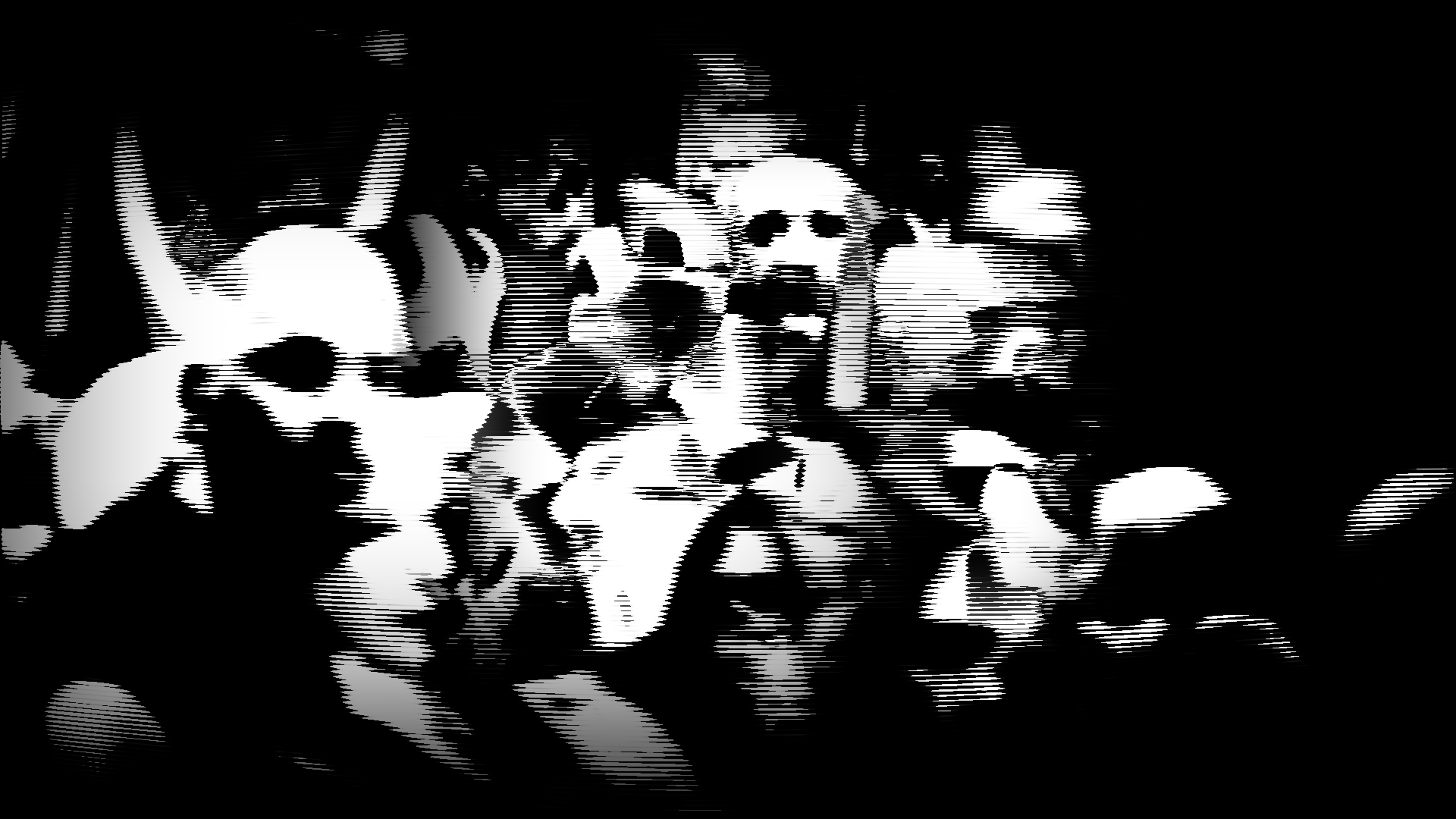
2026 | Experimental, Political | Short Film | 5min 9sec
-
Image: Dylan Ferenc Nyerges
Sound: Mitch Elliot
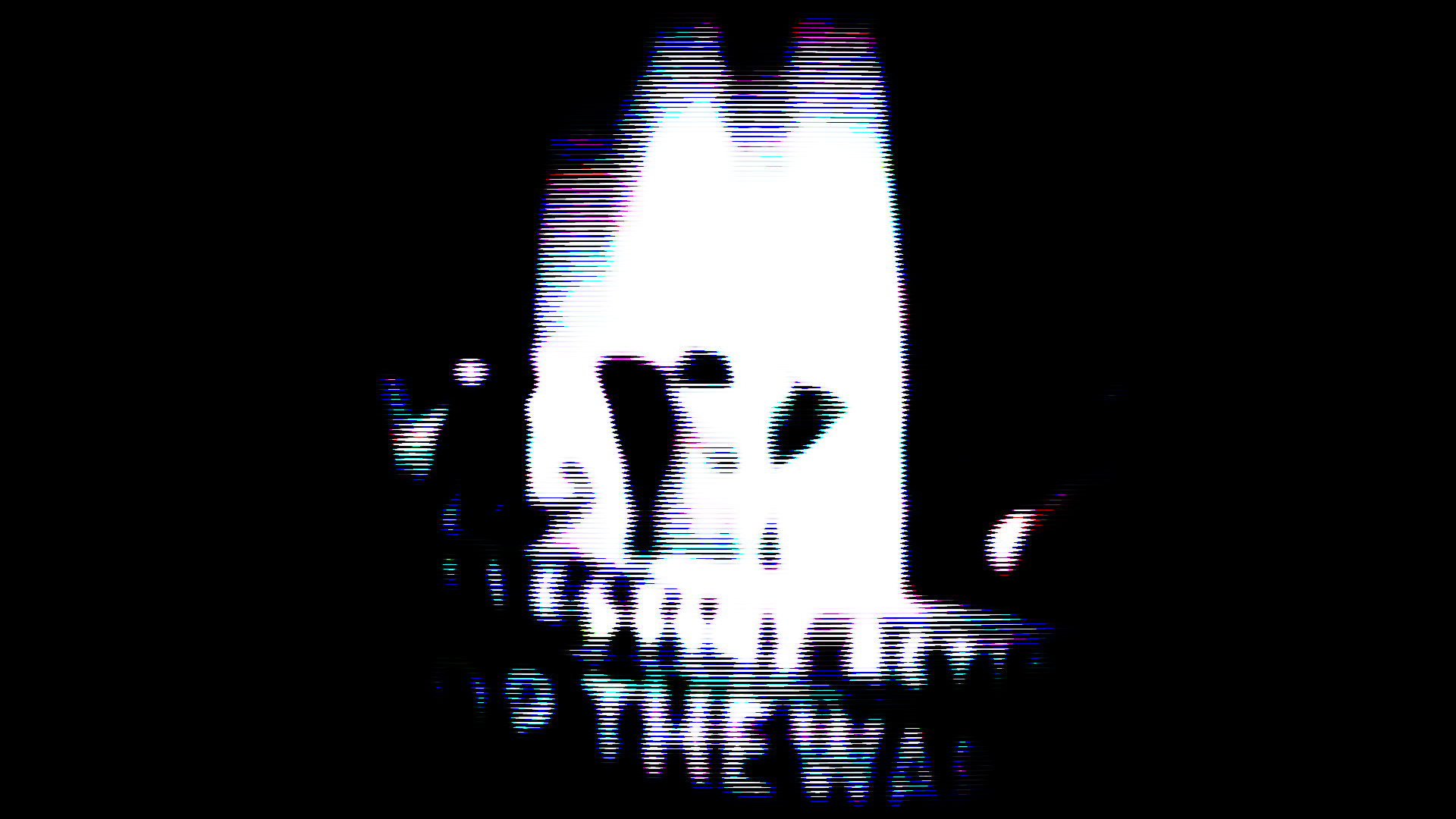
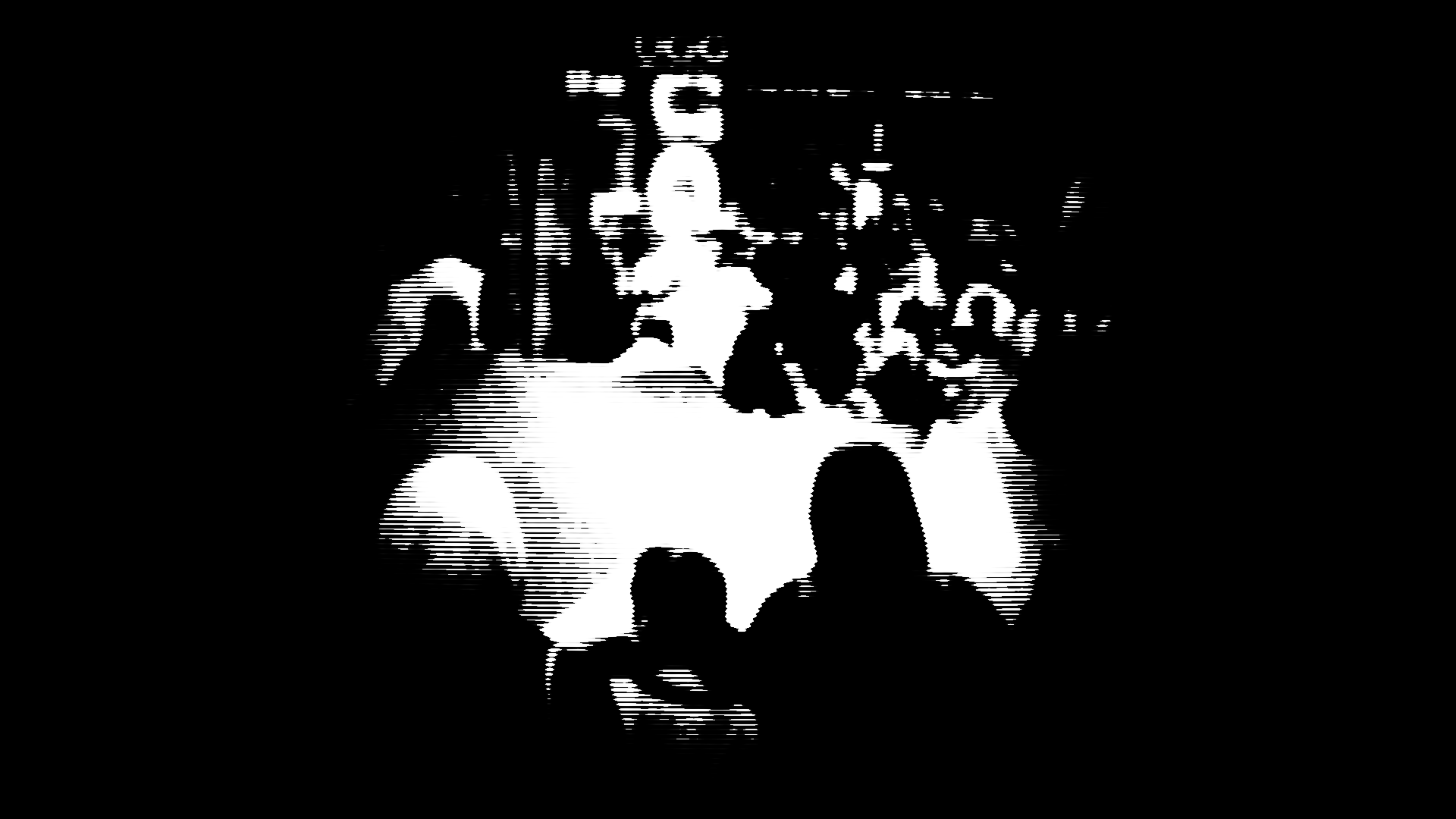
The Body’s Deepest Well is an experimental political documentary and audio-visual collaboration between Dylan Nyerges and Mitch Elliott. Captured digitally, images of protest have been digitally deconstructed and manipulated to form a formal logic of signs discovered through the editing process. Combined with Mitch Elliott’s immersive audio, the resulting work is an affective magnification of a political moment, charged with potency and power.
Exhibition
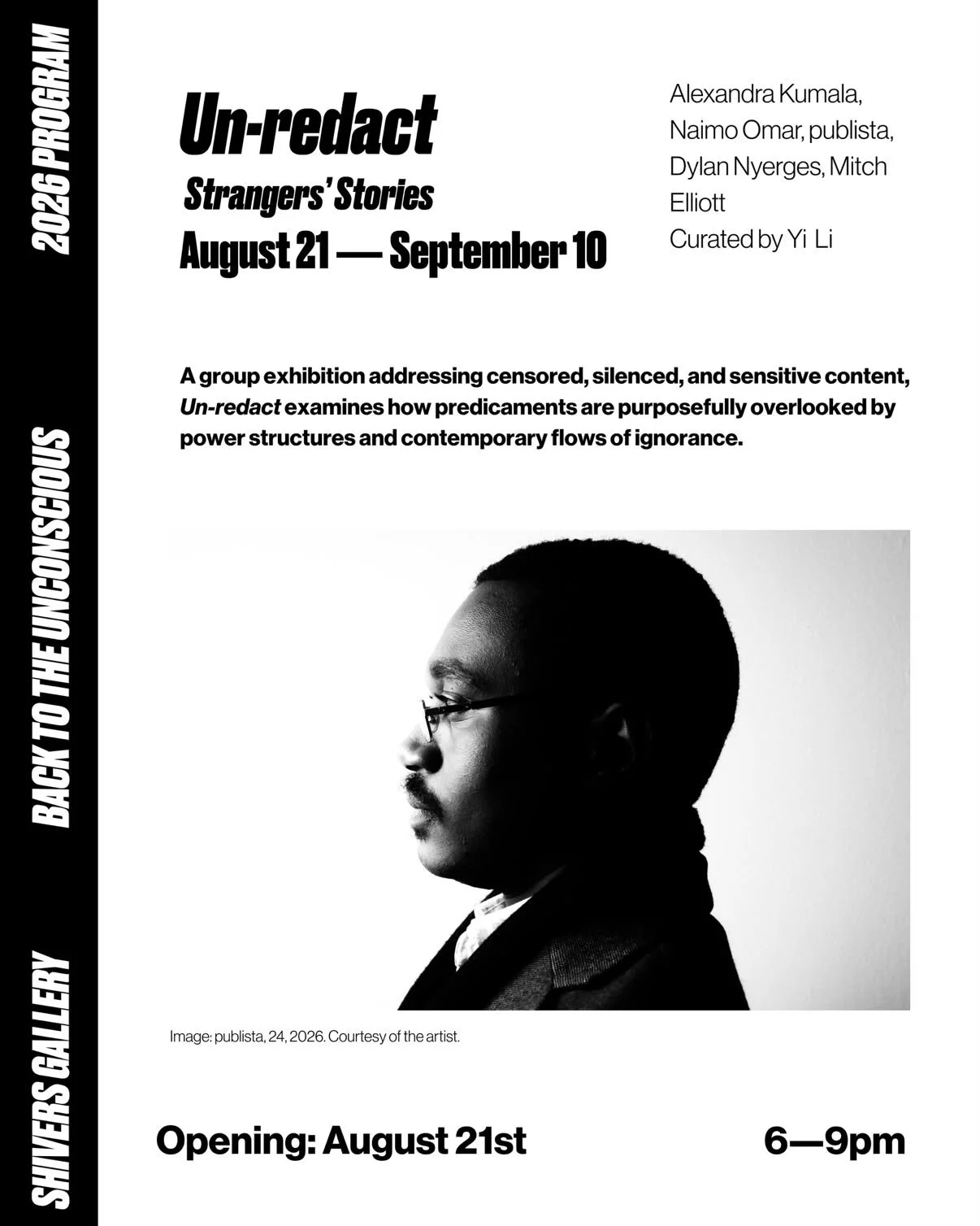
Un-redact Strangers’ Stories
August 21 - September 10,
Curated by Yi Li
SHIVERS Gallery 2026 program: Back to the Unconscious
(Naarm / Melbourne)
Un-redact Strangers’ Stories
Literally referring to works addressing censored, silenced and sensitive content, this exhibition examines how predicaments are purposefully overlooked by power structures and contemporary flows of ignorance. It draws parallels between silenced ideas and knowledge in the contexts of censorship and epistemic suppression, calling on us to un-redact the stories of ‘strangers’ and dismantle learned logics, opening possibilities for alternative futures.
Un-redact Strangers’ Stories creates an interstice for silenced ideas and histories. Alexandra Kumala brings together comparable ironies in Vieques and Bali. The atrocious impact of the US military on these islands is far lesser known than their labels as destinations for tourism. But local communities became reluctant to tell the truths publicly. With notes taken during the project and verbatim quotes from the collaborators, the work interrogates how international geopolitical structures result in these local silences. Naimo Omar’s deceptive sculptural forms imply how Somalia’s colonial and resistance history can be obscured in western archives. At first glance, the looh with the Somali Osmanya alphabet is passively contained on a trolley, evoking the transportation of artefacts and distortion of their meanings. But Omar’s artistic manipulation of the replica is essentially a device for rejecting the mystification.
Concurrently, responsive forces plead for imagining a different pathway. publista recontextualises his three-year, cross-national project that contains ‘censored’ information in Egypt. The symbolic semi-redaction is centred in its aesthetics: complementary coloured drapery and highlights, and the anonymity of the portraitures. The illicit fragments of where the conversation took place are revealed here in Naarm. Dylan Nyerges and Mitch Elliott’s audio-visual collaboration deconstructed footage of a public demonstration, questioning why the cinema environment in Australia cannot be more politically explicit. What evaporates from their ‘logic of signs’ and publista’s interview repository is a prompt for unbounded imagination, action and practice for intervention and new possibilities. Employing reduced and redacted forms for thinking anew, both are ambitious protests themselves: refusing conformity to ‘safe dialogues.’ These gestures are by no means legible as acts of care.
Having grown up in a country where information control exists at every level and speech can have punitive consequences, I feel deeply constrained about what I can say here as my family remains there. So-called Australia is not governed by totalitarian censorship, but unspoken rules about what is better left uncommented on remain entrenched. This internalised speech repression can be the product of an attempt not to offend others, as well as of the programmed values in neoliberalist cultures. We are accustomed to thinking about political borders and otherness, and we are taught to be preoccupied with our individual lives.
Indifference is not innate. A lack of sight is neither arbitrary nor natural but grounded in a structural system where moral knowledge is determined by the epistemology in the imbalanced power, as Charles W. Mills put forward in The Racial Contract. Strangers’ stories are knowledge deemed not ‘morally ’ urgent within this framework, and this is the self-censorship permeating this country of affluence. Both liberal and authoritarian worlds contain their own regimes of silence. In response, the act of un-redacting is constructed within this exhibition: Kumala and Omar create space for storytelling outside the official archives, whilst publista, Nyerges and Elliott intercede, calling for a shift in the learned systems of thought.
Reference: Mills, Charles W. The Racial Contract. Ithaca, NY: Cornell University Press, 1997.
Written by Yi Li